

Effective thermal management is essential for performance, reliability, and product lifespan in modern electronic systems. As power density increases and device sizes continue to shrink, standard off-the-shelf heat sinks are often insufficient. In these cases, working with a reliable custom heat sink manufacturer is critical to the product development process. This article outlines the key factors to consider when selecting the right manufacturing partner.
Evaluate Technical Expertise & Capability
A reliable custom heat sink supplier should offer more than machining capability. Strong thermal engineering knowledge is essential, especially for applications involving high power density or strict space constraints.
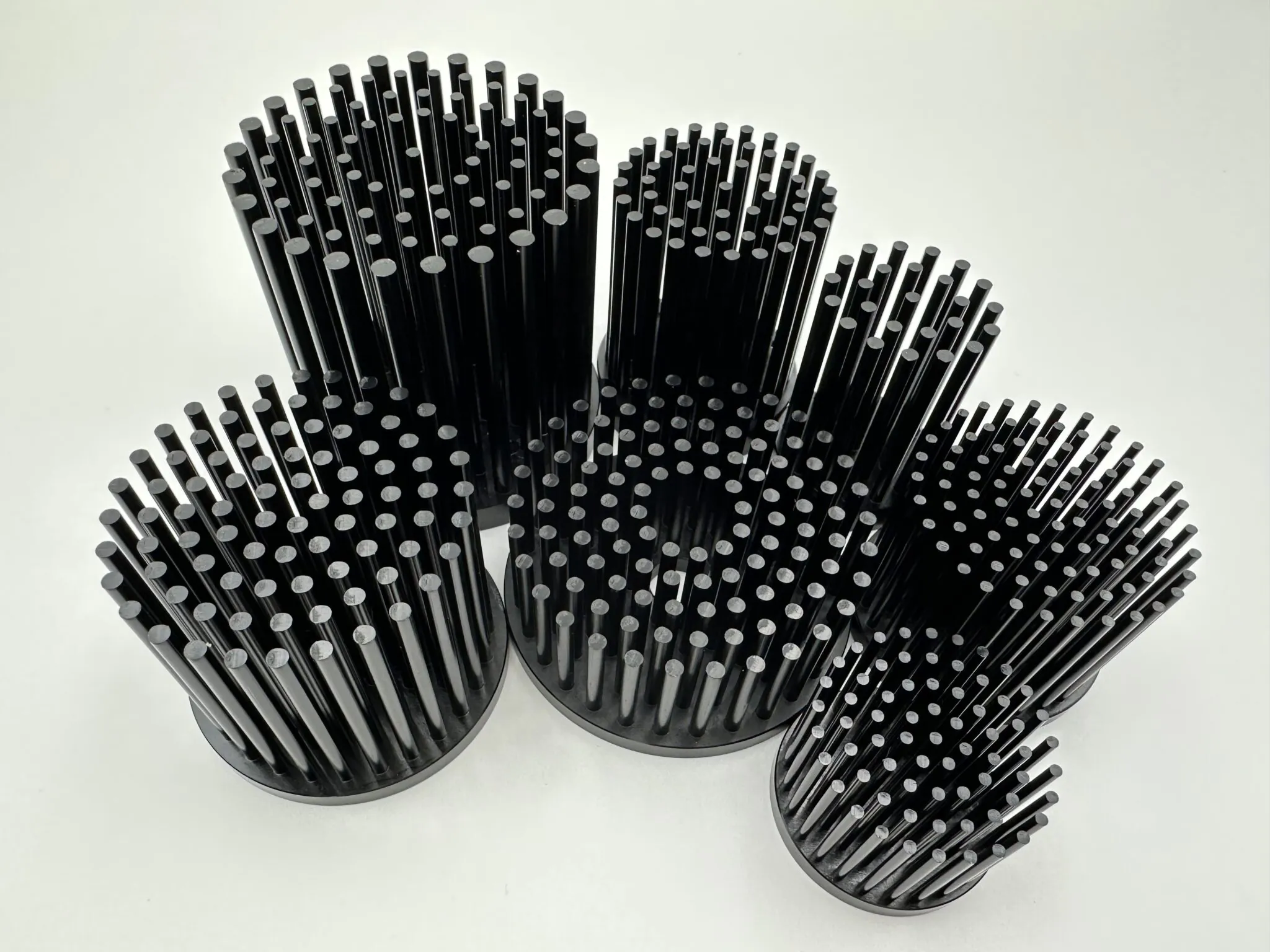
Look for manufacturers who understand heat transfer principles and can recommend appropriate solutions based on your thermal requirements. This includes experience with different heat sink types—such as skived, extruded, or bonded heat sinks—as well as the ability to optimize fin geometry, material selection, and airflow conditions. Engineering-driven recommendations often lead to better performance and fewer design iterations.
Manufacturing & Process Coverage
Manufacturing capability directly impacts product quality, consistency, and lead time. A dependable manufacturer should have in-house production processes rather than relying heavily on subcontracting.
Key capabilities may include skiving, aluminum extrusion, CNC machining, and surface treatments such as anodizing or plating. Equally important is the ability to support the full production cycle—from prototypes and small batches to stable mass production—while maintaining consistent quality standards.
Customization & Design Support
Customization is at the core of custom heat sink projects. A reliable manufacturer should be flexible in accommodating non-standard dimensions, fin spacing, base thicknesses, and mounting features.
Beyond fabrication, design support is a major advantage. Manufacturers who provide drawing reviews, DFM (Design for Manufacturability) feedback, and feasibility assessments can help identify potential issues early. This collaboration reduces development risk and improves overall project efficiency.
Quality Control & Certifications
Quality consistency is one of the most important indicators of a reliable supplier. Ask about the manufacturer’s quality management system, including ISO 9001 certification, and its inspection processes.
Effective quality control typically includes incoming material inspection, in-process monitoring, and final dimensional and visual checks. For heat sinks, factors such as fin integrity, flatness, and surface finish are critical to performance and assembly reliability. A strong quality system ensures that mass-produced parts match approved samples.
Experience in Target Industries
Different industries place different demands on thermal solutions. A manufacturer with experience in your target application—such as power electronics, EV charging systems, industrial equipment, or telecommunications—will better understand your requirements.
Application experience helps manufacturers anticipate challenges related to thermal loads, environmental conditions, and long-term reliability. This practical knowledge often translates into more effective and robust heat sink designs.
Lead Time, Scalability, & Supply Reliability
Project schedules and product launches depend heavily on supply reliability. When evaluating manufacturers, consider prototype lead times, production scalability, and long-term capacity planning.
A reliable partner should be able to support increasing volumes without compromising quality or delivery. Clear communication about lead times, production planning, and material availability is essential for minimizing supply chain risks.
Communication & Engineering Collaboration
Smooth communication is frequently underestimated but plays a critical role in successful collaboration. A professional manufacturer should provide clear, timely responses and offer direct access to technical support or engineering teams.
Manufacturers who actively engage in problem-solving and provide constructive feedback are far more valuable than those who simply process orders. Strong collaboration helps ensure that thermal solutions meet both performance and production requirements.
Total Cost Considerations
While unit price is important, it should not be the only decision factor. Reliable manufacturers provide transparent pricing and help customers evaluate total cost, including tooling, redesigns, delays, and potential quality issues.
In many cases, a slightly higher unit cost results in better performance, fewer revisions, and lower overall project risk—making it a more cost-effective choice in the long term.
Conclusion: Building a Long-Term Thermal Management Partner
Selecting a reliable custom heat sink manufacturer is about more than finding a supplier—it is about choosing a long-term thermal management partner. By evaluating engineering expertise, manufacturing capabilities, quality systems, communication, and industry experience, you can reduce development risks and ensure consistent performance.
At Dingmetal, we are a custom heat sink manufacturer with over 10 years of experience in thermal management solutions. We are certified to IATF 16949, ISO 9001, and ISO 14001, ensuring compliance with strict quality, automotive, and environmental standards. Our capabilities span a wide range of materials, surface finishes, and manufacturing processes, enabling us to support highly customized heat sink designs.
With in-house production, engineering-driven support, and a focus on long-term reliability, we work closely with customers from initial design and prototyping through stable mass production. Our goal is not only to manufacture heat sinks, but to serve as a dependable thermal management partner for industrial, automotive, and high-performance electronic applications.